


By: Spencer Munns
Gainesville sits at the intersection of a major interstate corridor, a large university campus, and a sprawling rural road network. I-75 carries high-speed traffic from Georgia through Alachua County. University Avenue and SW Archer Road move thousands of students, cyclists, and pedestrians alongside vehicles every day. Waldo Road and the county road network outside the city run through low-visibility rural intersections where serious crashes happen far from immediate help.
The legal issues that arise from car accidents in this environment are specific to where and how they happen. Bogin, Munns & Munns has represented car accident victims in Gainesville and across Alachua County since 1979. Our attorneys understand the roads, the courts, and the insurance dynamics that shape these cases here.
Free consultations available. Call (352) 332-7688.
What Types of Car Accident Cases Does Bogin, Munns & Munns Handle in Gainesville?
Our Gainesville car accident team represents clients injured in:
- Multi-vehicle collisions on I-75 and US-441
- Intersection crashes on Newberry Road, SW Archer Road, and University Avenue
- Pedestrian and bicycle accidents near UF campus
- Drunk and impaired driving accidents
- Wrong-way driver crashes on I-75
- Hit-and-run accidents
- Distracted driving and cell phone-related accidents
- Rear-end collisions in heavy student-area traffic
- Teen and young driver accidents
- Accidents caused by out-of-state drivers on the I-75 corridor
If your accident does not fit one of these categories, contact us. We evaluate every case individually.
To consult with an experienced car accident lawyer serving Gainesville
(855) 780-9986
How Does Florida’s No-Fault Insurance System Work After a Gainesville Accident?
Florida requires all registered vehicle owners to carry Personal Injury Protection coverage, known as PIP, which pays up to 80% of medical expenses and 60% of lost wages up to a $10,000 limit, regardless of who caused the crash.
To access the full $10,000, you must seek treatment from a qualified provider within 14 days of the accident and receive a classification of emergency medical condition. Non-emergency conditions are limited to $2,500.
PIP is designed for minor injuries. When injuries are serious, Florida law allows an injured driver to step outside the no-fault system and file a lawsuit against the at-fault driver under Florida Statute Section 627.737, provided the injuries resulted in significant and permanent loss of an important bodily function, permanent injury, significant and permanent scarring or disfigurement, or death.
Call (352) 332-7688 to discuss whether your injuries meet this threshold.

How Does Florida’s Distracted Driving Law Affect a Car Accident Case?
Florida Statute Section 316.306 prohibits texting while driving and requires hands-free operation of a mobile device in school zones and work zones. A driver who violates this law and causes an accident has committed a statutory violation that directly supports a negligence claim.
What Evidence Proves Distracted Driving in Alachua County?
Proving distracted driving requires evidence beyond what witnesses can observe from outside the vehicle. Cell phone records, obtained through a subpoena to the carrier, can show the exact timestamp of calls, texts, and app activity in the moments before a crash. The vehicle’s event data recorder, known as an EDR or black box, captures pre-crash speed, braking, and steering inputs that can show the driver failed to react to a hazard in time.
Social media posts and messaging apps often preserve time-stamped records of activity that match the moment of impact. An attorney acts quickly to subpoena these records and send preservation demands before carriers and platforms delete data under their standard retention schedules.
Gainesville Car Accident Lawyer Near Me
(855) 780-9986
What If You Were Hit While Walking or Biking Near the UF Campus?
Gainesville has one of the highest concentrations of pedestrian and bicycle traffic in Florida, concentrated around the University of Florida campus and the surrounding neighborhoods. When a driver strikes a pedestrian or cyclist in this environment, the legal analysis depends on where the collision occurred and what duties each party had at the time.
What Rights Do Pedestrians Have at Crosswalks in Florida?
Florida Statute Section 316.130 requires drivers to yield to pedestrians at marked crosswalks and at intersections where a pedestrian has entered the road. A driver who fails to yield and strikes a pedestrian in a marked crosswalk has violated the statute, which supports a negligence per se argument, meaning the statutory violation itself establishes negligence without additional proof of careless conduct.
What About Cyclists and Dooring Accidents in Gainesville?
Dooring accidents occur when a driver or passenger opens a vehicle door into a cyclist’s path without checking for approaching bike traffic. In Gainesville’s bike-heavy corridors, dooring is a documented hazard. Florida law requires the vehicle occupant to check for approaching traffic before opening a door. When a door is opened without adequate check and a cyclist is struck, the vehicle’s occupant bears liability for the collision.
Call (352) 332-7688 if you were injured as a pedestrian or cyclist in Gainesville.
What Is Dram Shop Liability and When Does It Apply in Florida?
Dram shop liability is the legal doctrine that holds alcohol vendors, including bars and restaurants, responsible for injuries caused by a person they served when that service contributed to the intoxication that caused the harm.
 Florida Statute Section 768.125 establishes limited dram shop liability. In Florida, a vendor who sells or provides alcohol to a person who is knowingly served while habitually addicted to alcohol, or to a person under the legal drinking age, can be held liable for injuries that person causes while intoxicated.
How Does Dram Shop Liability Apply to Gainesville’s Bar Corridor?
University Avenue and the surrounding entertainment district near UF serve thousands of patrons each night during the academic year. When a driver who was recently at a bar in this corridor causes a serious accident, an attorney investigates whether the establishment served the driver while they were visibly intoxicated or beyond the point where a reasonable vendor should have stopped service.
Evidence in a dram shop claim includes security camera footage from the establishment, credit card records showing the volume and timing of alcohol purchases, and witnesses who observed the driver’s condition at the bar before the crash. A dram shop claim runs parallel to the driver negligence claim, providing an additional source of liability and insurance coverage for the injured person.
Click to contact our Gainesville Car Accident Lawyerss today
What If You Were Hit by a Wrong-Way Driver on I-75?
Wrong-way driver accidents on I-75 through Alachua County produce some of the most catastrophic collisions on Florida’s highway system. A wrong-way driver’s conduct is negligence per se, meaning the act itself establishes negligence without additional proof. When the wrong-way driver was intoxicated, the dram shop liability analysis above may also apply.
In some cases, the Florida Department of Transportation bears additional responsibility for inadequate signage, wrong-way detection system failures, or lighting deficiencies at the interchange where the driver entered the highway.
When the wrong-way driver has limited insurance or dies in the crash, your own uninsured motorist coverage, known as UM coverage, may be the primary recovery source. An attorney identifies every available insurance source and pursues compensation from each.
Are Parents Liable If Their Teenager Caused Your Car Accident in Gainesville?
Yes, in certain circumstances. Florida Statute Section 322.09 requires a parent or legal guardian to sign the license application of a minor under 18. By signing, the adult accepts financial responsibility for any damage the minor causes while operating a motor vehicle.
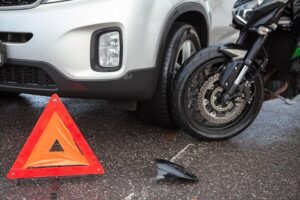 When a teenager with a parent-signed license causes an accident, the parent’s signature creates a direct basis for holding the parent financially responsible for the damages, even if the parent was not in the vehicle.
Beyond the signing statute, the negligent entrustment doctrine applies when a vehicle owner allows someone they know or should know is unfit to drive to use their vehicle. When an accident results, both the driver and the owner who entrusted the vehicle can be held liable. An attorney identifies every party who bears responsibility and pursues compensation from each available source.
Submit a Consultation Request form today
How Does Not Wearing a Seat Belt Affect Your Car Accident Claim in Florida?
Florida Statute Section 316.614 requires seat belt use for all occupants of a motor vehicle. When an accident victim was not wearing a seat belt, defense attorneys and insurance companies routinely raise this as a basis to reduce the amount of compensation the victim can recover.
Florida courts have held that evidence of seat belt non-use is admissible to reduce damages, not to eliminate liability entirely. The argument is that injuries would have been less severe had the victim been buckled. An attorney challenges overstated seat belt defense arguments with medical expert testimony that addresses whether the specific injuries would have actually been different with seat belt use, rather than accepting a blanket reduction based on non-use alone.
How Long Do You Have to File a Car Accident Claim in Gainesville?
Two years. Under Florida Statute Section 95.11, personal injury claims from car accidents must be filed within two years of the date of the accident. Florida reduced this deadline from four years to two years effective March 24, 2023. Wrongful death claims carry the same two-year deadline running from the date of death.
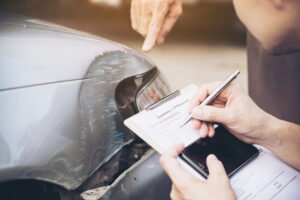 Evidence critical to your case, including surveillance footage, cell phone records, and event data recorder data, deteriorates or is deleted quickly after an accident. An attorney acts immediately to send preservation demands before that evidence is lost.
Do not wait. Call (352) 332-7688.
Why Gainesville Residents Choose Bogin, Munns & Munns for Car Accident Cases
Bogin, Munns & Munns has represented personal injury clients in Gainesville and across Alachua County since 1979. Our car accident attorneys know the specific road corridors where accidents concentrate in this community, the insurance issues that arise for students and out-of-state drivers, and how Alachua County courts handle these cases.
We handle car accident cases on a contingency fee basis. You pay no attorney’s fees unless we recover compensation for you. The initial consultation is free.
Our Gainesville office is at 4411 NW 8th Avenue, Suite B, Gainesville, FL 32605.
Talk to a Gainesville Car Accident Lawyer at Bogin, Munns & Munns
A car accident in Alachua County sets off a chain of medical, financial, and legal obligations all at once, often while you are still dealing with the physical impact of the crash. Bogin, Munns & Munns takes the legal work off your plate so you can focus on recovery.
Free consultations. No fee unless we recover.
Call (352) 332-7688 or contact us online.
4411 NW 8th Avenue, Suite B, Gainesville, FL 32605 | (352) 332-7688
Call or Submit Our Consultation Request Form Today