







By: Spencer Munns
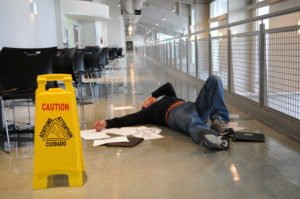
A fall can happen anywhere. On a wet floor in a Brevard County hospital corridor. On an unmarked construction trench along US-192. On a poorly lit parking lot outside a Melbourne shopping center. On a dock at an Indian River Lagoon access point.
The physical location matters less than whether the property owner, manager, or operator failed to maintain a reasonably safe condition and whether that failure caused your injury. When it did, Florida law provides a path to hold them accountable.
Bogin, Munns & Munns represents slip and fall injury victims throughout Melbourne and Brevard County. Our premises liability attorneys evaluate the specific facts of your fall, identify every responsible party, and build the case. Free consultations available.
Call (321) 254-3939.
What Types of Properties Are Most Common for Slip and Fall Accidents in Melbourne?
Brevard County’s mix of commercial development, healthcare facilities, active construction corridors, and recreational areas creates a range of settings where property owners have maintenance obligations and where failures cause serious falls.
Healthcare Facilities
Holmes Regional Medical Center and outpatient clinics throughout Melbourne generate a significant category of fall claims. Patients who are already injured or ill walk on floors that must be maintained to specific standards. A wet hallway, an unmarked threshold, or a poorly maintained entrance creates heightened risk for a population that has less capacity to catch themselves.
Retail and Commercial Properties
Properties along Eau Gallie Boulevard, US-192, and the Palm Bay Road corridor see regular slip and fall incidents from wet entrances during Florida’s rain season, unmarked floor transitions, and spills left unaddressed in grocery and big-box retail stores.
Active Construction Zones
 Construction zones along I-95 interchanges, US-192, and residential development projects throughout Brevard County create hazards for both workers and members of the public who encounter unmarked excavations, debris, and uneven temporary surfaces.
Recreational Venues
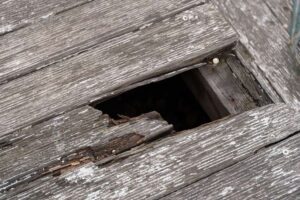
Brevard County beach parks, Indian River Lagoon dock and pier access points, and fitness facilities throughout Melbourne present fall risks from wet surfaces, deteriorating dock boards, and improperly maintained outdoor infrastructure.
Assisted Living Facilities and Nursing Homes
Facilities serving Melbourne’s significant retirement-age population are the site of some of the most serious fall injuries in Brevard County. Residents who fall in these settings are often among the most vulnerable individuals in the community.
To consult with an experienced slip and fall accident lawyer serving Melbourne
(855) 780-9986
What Is the “Open and Obvious” Doctrine and How Does It Affect Your Claim?
The open and obvious doctrine is a defense that property owners raise in Florida slip and fall cases. The argument is that if a hazard was visible and apparent enough that a reasonable person would have seen and avoided it, the property owner should not be held liable for injuries it caused.
Florida courts recognize this doctrine but apply it with important limitations. The existence of an open and obvious hazard does not automatically eliminate the property owner’s liability. The analysis focuses on whether the risk was truly something the injured person could have reasonably avoided under the circumstances.
When Does an Obvious Hazard Still Create Liability?
An obvious hazard can still support a liability claim when the injured person had no reasonable alternative route or was required by the circumstances to encounter the hazard to accomplish a legitimate purpose on the property. This is called the forced exposure scenario.
If the only accessible entrance to a building has a known hazardous surface and no alternative path exists, a fall on that surface may still be actionable even if the hazard was visible. Florida’s modified comparative fault rules also interact with the open and obvious doctrine.
A jury may assign a percentage of fault to the injured person for encountering an obvious hazard while still holding the property owner liable for their share. An attorney evaluates whether the specific circumstances of your fall support a claim despite an open and obvious defense.
Call (321) 254-3939 to discuss the specific facts of your fall.
Can You Sue a Nursing Home or Assisted Living Facility for a Fall in Melbourne?
Yes. Nursing homes and assisted living facilities in Florida have a legally defined duty to protect residents from foreseeable fall risks, and that duty is more demanding than the standard that applies to a retail store or commercial property.
What Legal Standard Applies to Residential Care Facilities?
Florida Statute Section 400.022 establishes nursing home residents’ right to receive adequate care consistent with recognized practice standards. Facilities must conduct fall risk assessments, implement fall prevention protocols, use appropriate assistive devices, and maintain adequate staffing for residents identified as fall risks.
 When a facility fails to follow its own protocols, staffs below required minimums, or leaves a known fall-risk resident unassisted, that failure supports a premises liability claim or a claim under Florida’s nursing home resident rights statute. The facility’s care plan, staffing records, fall incident reports, and internal communications all become relevant evidence. An attorney requests and preserves these records immediately.
What If Poor Lighting or Negligent Security Caused Your Fall?
Not all slip and fall cases involve a substance on the floor. Property owners have a broader duty to maintain reasonably safe conditions, which includes adequate lighting in common areas, parking lots, walkways, and stairwells.
When inadequate lighting prevents a person from seeing a hazard they would have otherwise avoided, the failure to maintain sufficient illumination is itself an independent basis for liability. A burned-out parking lot light, an unlit stairwell in a commercial building, or a poorly lit entrance to a Melbourne retail establishment can each create conditions for a serious fall.
The liability analysis requires establishing that the property owner knew or should have known about the lighting deficiency and failed to correct it within a reasonable time. Evidence includes maintenance records showing when bulbs were last replaced, prior complaints or incident reports about inadequate lighting at the location, and photographs or measurements of the light levels at the time of the fall.
Call (321) 254-3939 if lighting conditions contributed to your fall.
Melbourne Slip and Fall Accident Lawyer Near Me
(855) 780-9986
Who Is Responsible If You Fell on a Construction Site in Melbourne?
Construction site falls involving members of the public typically arise when a project creates hazardous conditions in areas where the public has a right to be, such as adjacent sidewalks, parking areas, or public access routes near an active project.
What Is the Difference Between General Contractor and Subcontractor Liability?
The general contractor bears overall responsibility for site safety and the surrounding areas. Subcontractors are independently responsible for hazards within their specific scope of work. When a member of the public is injured, both parties may share liability depending on who created the hazard and who had the duty to control access to it. The property owner who hired the general contractor may also face liability depending on how the construction contract allocated safety responsibilities.
An attorney investigates the permit records, construction contract, each subcontractor’s scope of work, and the project’s safety plan to identify every responsible party.
Can Both the Property Owner and Property Manager Be Liable for Your Fall?
Yes, in many commercial property situations. Many Melbourne commercial properties are owned by one entity and managed day-to-day by a separate property management company under contract. The management contract typically defines who is responsible for routine maintenance, hazard inspection, and incident response.
When a maintenance failure causes a fall, both the property owner and the property manager may be separately liable depending on what the contract required of each and who failed to act. The property owner cannot necessarily escape liability by pointing to the management company, nor can the management company escape by pointing to the owner.
An attorney reviews the property management contract, the maintenance records, and the specific responsibilities each party assumed to determine who bore the duty that was breached and to name every responsible party in the claim.
Click to contact our Melbourne Slip and Fall Accident Lawyerss today
What If You Fell in a Hospital or Healthcare Facility in Brevard County?
Falls in healthcare facilities involve a specific analysis that differs from a standard commercial premises liability case.
 A hospital or outpatient clinic owes a duty of care to patients and visitors as a property owner. The facility must maintain floors, walkways, and common areas in a reasonably safe condition. Wet floors near patient care areas without adequate signage, damaged flooring in corridors, or malfunctioning entryway systems can each give rise to a premises liability claim.
However, when a patient falls as a result of inadequate supervision, improper assistance during ambulation, or a failure by clinical staff to implement a care-ordered fall prevention measure, that claim may also involve elements of medical negligence rather than pure premises liability. Medical malpractice claims in Florida carry different procedural requirements, including a pre-suit expert affidavit requirement under Chapter 766 of the Florida Statutes.
An attorney evaluates the specific circumstances of a fall in a healthcare setting to determine whether the claim sounds in premises liability, medical negligence, or both, and pursues the appropriate path.
Call (321) 254-3939 if you fell in a hospital or healthcare facility in Melbourne.
How Do You Prove a Property Owner Knew About the Hazard Before Your Fall?
Establishing knowledge of the dangerous condition before the fall is often the most critical issue in a Melbourne slip and fall case. Florida law requires proof of actual or constructive knowledge. Actual knowledge means the owner or an employee was directly aware of the condition, shown through eyewitness accounts, prior complaint records, work orders, or internal communications. Constructive knowledge means the condition existed long enough that a property exercising reasonable care would have discovered it, shown through inspection logs, patterns of similar conditions at the same location, and the physical characteristics of the hazard itself.
Under Florida Statute Section 768.0755, which governs claims involving transitory foreign substances in business establishments, the injured person must prove the owner knew or should have known through either standard. An attorney sends a formal evidence preservation demand immediately upon being retained to prevent surveillance footage, maintenance records, and inspection logs from being destroyed before litigation begins.
Submit a Consultation Request form today
What Compensation Can Melbourne Slip and Fall Victims Recover?
Florida law allows slip and fall victims to pursue economic and non-economic damages when a property owner’s negligence caused the fall.
Economic damages include all past and future medical expenses directly caused by the fall, lost wages during recovery, and for injuries that permanently reduce your capacity to work, the projected reduction in future earnings. For serious falls resulting in fractures, spinal injuries, or traumatic brain injuries, these economic damages can be substantial.
Non-economic damages cover physical pain and suffering, emotional distress, permanent physical limitations, loss of enjoyment of activities the injury has taken from you, and loss of consortium for the impact on your relationship with a spouse or partner.
When a fall results in death, surviving family members may pursue a wrongful death claim under Florida law in addition to any personal injury damages the deceased experienced before death.
How Long Do You Have to File a Slip and Fall Claim in Melbourne?
 Two years. Under Florida Statute Section 95.11, personal injury claims from slip and fall accidents must be filed within two years of the date of the accident. For claims against government entities in Brevard County, a pre-suit notice of claim must be filed within three years, and different damage caps apply.
Evidence deteriorates quickly after a fall. Surveillance footage is routinely overwritten. Maintenance records are purged on standard schedules. Witnesses’ recollections fade. An attorney acts immediately to send preservation demands and lock down the evidence before it disappears.
Do not wait. Call (321) 254-3939.
Why Melbourne Residents Choose Bogin, Munns & Munns for Slip and Fall Cases
Bogin, Munns & Munns has represented personal injury clients in Melbourne and Brevard County since 1979. Our premises liability attorneys handle the full range of fall cases that arise in this community, from standard commercial property claims to nursing home falls, construction site incidents, and healthcare facility injuries.
We handle slip and fall cases on a contingency fee basis. You pay no attorney’s fees unless we recover compensation for you. The initial consultation is free.
Our Melbourne office is at 7195 Murrell Rd, Suite 101, Melbourne, FL 32940.
Talk to a Melbourne Slip and Fall Lawyer at Bogin, Munns & Munns
A property owner’s failure to maintain safe conditions is a legal problem that has a legal solution. The evidence that supports your claim starts degrading immediately after the fall. An attorney acts quickly to preserve it and build the case before the trail goes cold.
Bogin, Munns & Munns offers free consultations. No fee unless we recover.
Call (321) 254-3939 or contact us online.
7195 Murrell Rd, Suite 101, Melbourne, FL 32940 | (321) 254-3939
Call or Submit Our Consultation Request Form Today
